The Indonesia–Middle East and North Africa (MENA) Desk provides comprehensive, multidisciplinary analysis of the evolving political, economic, investment, social, and cultural dynamics shaping Indonesia’s engagement with the MENA region. By uncovering strategic opportunities and unpacking complex geopolitical and developmental challenges, the Desk offers nuanced insights that inform policy, foster bilateral and multilateral cooperation, and deepen understanding of Indonesia’s growing role in the region.
Our research program delivers in-depth, policy-relevant analysis of Indonesia’s growing engagement with the Middle East and North Africa (MENA). We explore strategic sectors including energy, infrastructure, trade, investment flows, labor migration, and Islamic finance, as well as religious and cultural diplomacy. Through rigorous studies and English-language opinion editorials, we contribute to academic discourse and inform public policy. Findings are regularly shared via high-level forums, institutional collaborations, and public engagement platforms.
Our public engagement efforts include curated discussions on Indonesia–MENA relations, highlighting regional economic partnerships, labor and migration trends, shared religious networks, and evolving geopolitical dynamics. These dialogues, designed for a broad audience—including media professionals, students, scholars, and policymakers—promote informed discourse and encourage constructive cross-regional engagement.
The Indonesia–MENA Survey is an annual, nationally representative poll that gauges Indonesian perceptions of the MENA region and its relevance to Indonesia’s global outlook. With a sample size of 1,500 respondents, the survey explores public attitudes toward trade, foreign policy, religious ties, cultural affinity, labor relations, and perceived opportunities and challenges in the bilateral and multilateral space.
Our interactive dashboard provides real-time data visualization of economic and trade trends between Indonesia and MENA countries. Key indicators include bilateral trade volumes and sector-specific investment flows. This tool supports analysts, policymakers, and investors in tracking developments and identifying emerging opportunities.
Silk and Sands is a specialized publication offering timely, curated insights into trilateral dynamics among Indonesia, China, and the MENA region. The newsletter tracks geopolitical shifts, economic partnerships, strategic diplomacy, and cross-regional religious and cultural interactions. Distributed to diplomats, researchers, and policy professionals, it serves as a vital resource for staying abreast of evolving regional alignments.
We convene accessible, data-driven public discussions on China’s influence in Indonesia’s economic, political, and social spheres. Engaging citizens, journalists, academics, and policymakers, these events aim to elevate public literacy and encourage open, informed dialogue on the implications of China’s growing footprint.
Our research program delivers in-depth, policy-relevant analysis of Indonesia’s growing engagement with the Middle East and North Africa (MENA). We explore strategic sectors including energy, infrastructure, trade, investment flows, labor migration, and Islamic finance, as well as religious and cultural diplomacy. Through rigorous studies and English-language opinion editorials, we contribute to academic discourse and inform public policy. Findings are regularly shared via high-level forums, institutional collaborations, and public engagement platforms.
Our public engagement efforts include curated discussions on Indonesia–MENA relations, highlighting regional economic partnerships, labor and migration trends, shared religious networks, and evolving geopolitical dynamics. These dialogues, designed for a broad audience—including media professionals, students, scholars, and policymakers—promote informed discourse and encourage constructive cross-regional engagement.
The Indonesia–MENA Survey is an annual, nationally representative poll that gauges Indonesian perceptions of the MENA region and its relevance to Indonesia’s global outlook. With a sample size of 1,500 respondents, the survey explores public attitudes toward trade, foreign policy, religious ties, cultural affinity, labor relations, and perceived opportunities and challenges in the bilateral and multilateral space.
Our interactive dashboard provides real-time data visualization of economic and trade trends between Indonesia and MENA countries. Key indicators include bilateral trade volumes and sector-specific investment flows. This tool supports analysts, policymakers, and investors in tracking developments and identifying emerging opportunities.
Silk and Sands is a specialized publication offering timely, curated insights into trilateral dynamics among Indonesia, China, and the MENA region. The newsletter tracks geopolitical shifts, economic partnerships, strategic diplomacy, and cross-regional religious and cultural interactions. Distributed to diplomats, researchers, and policy professionals, it serves as a vital resource for staying abreast of evolving regional alignments.
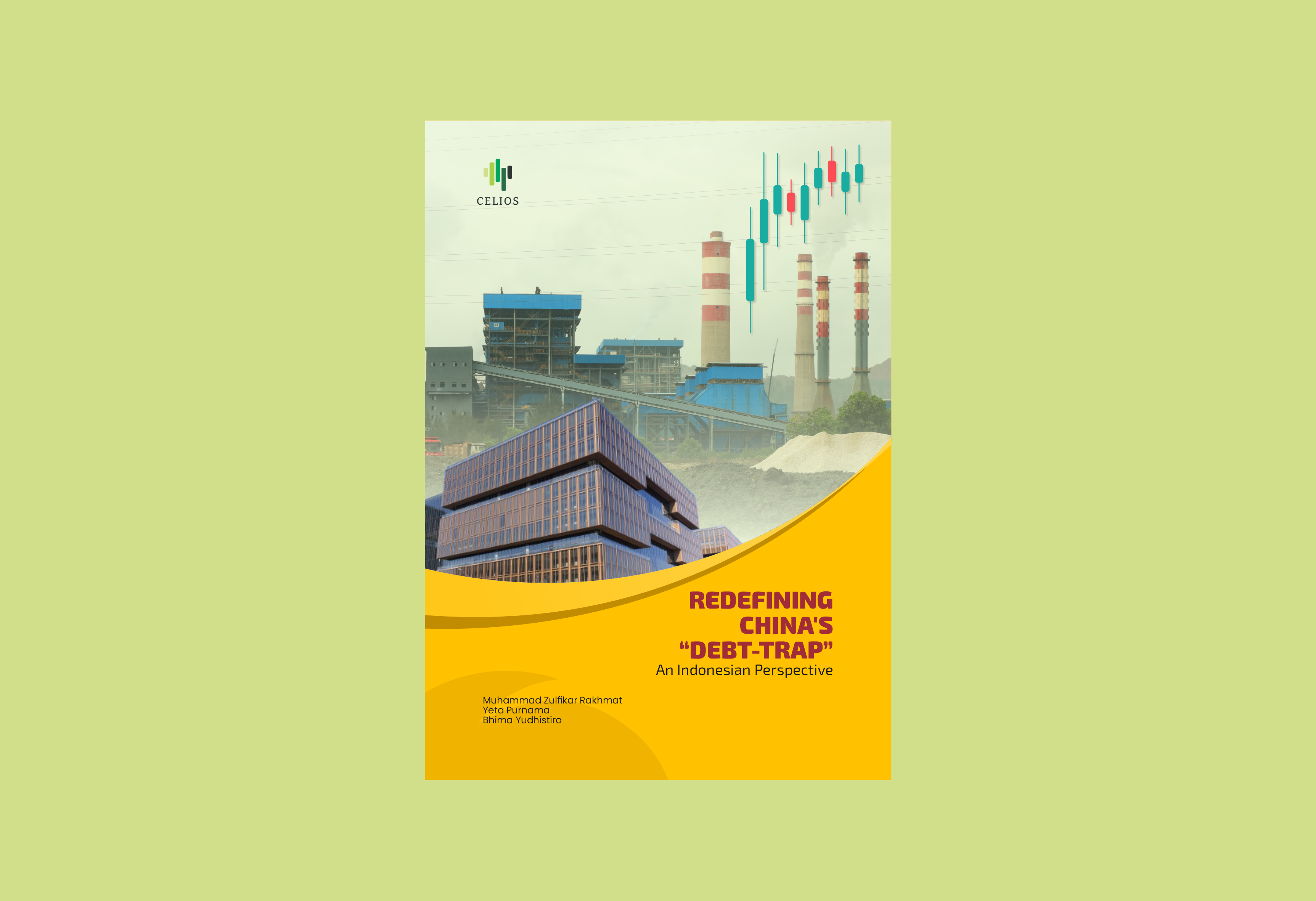
Dalam 10 tahun terakhir, hubungan Indonesia-China mencapai puncaknya sejak peluncuran Belt and

Jakarta, 26 Oktober 2024—Belum genap satu minggu setelah pelantikan presiden dan jajaran

Jakarta, 22 Agustus 2024—China-Indonesia Desk CELIOS, meluncurkan “China-Indonesia Provincial Index” pertama di

Jakarta, 4 Agustus 2023—Menjelang Pemilu 2024, CELIOS menyoroti interaksi tiga kandidat presiden

Jakarta, 15 Juni 2023—Perkembangan investasi China di negara berkembang, termasuk Indonesia, melalui

PLTU batu bara captive adalah pembangkit listrik yang dimiliki oleh swasta dan