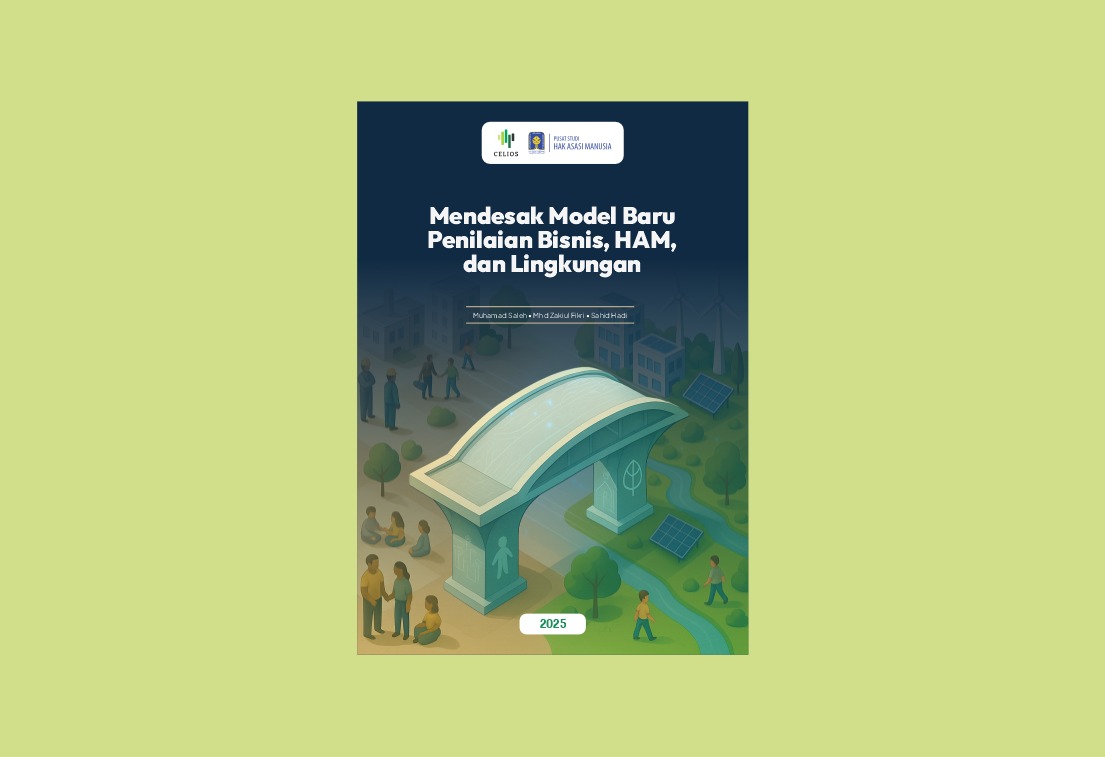
Sustainability instruments in Indonesia—such as PROPER, PRISMA, Norma 100, TKBI, and LKPM—remain fragmented, voluntary, lack field verification, and do not disclose results to the public. As a result, companies can engage in partial compliance without addressing real human rights and environmental harms on the ground.
The CELIOS & PUSHAM UII study reveals that:
- 4 out of 5 national instruments are voluntary and unverified.
- Major conflicts in the LQ45 energy sector include environmental pollution, land disputes, community intimidation, road blockades, and heavy-equipment accidents.
- 73.3% of LQ45 energy companies with active ESG reporting still scored Poor on environmental performance.
- 66.7% of state-owned energy companies scored Poor on labor-related indicators.
Through the PRISMA-ESG instrument, the study introduces a new evaluation model integrating five key dimensions: environment, sustainable finance, human rights & supply chain risks, labor, and investment accountability—translated into 50 measurable indicators.
CELIOS and PUSHAM UII urge the government to:
- Implement a comprehensive reform of Indonesia’s business & human rights assessment frameworks.
- Adopt mandatory human rights and environmental due diligence.
- Integrate human rights and environmental assessments into licensing, financing, and sanctions mechanisms.
- Prioritize high-risk sectors such as energy using a risk-based approach.
Download the full report to see how this new assessment model can strengthen human rights protection, environmental governance, and corporate accountability in Indonesia.