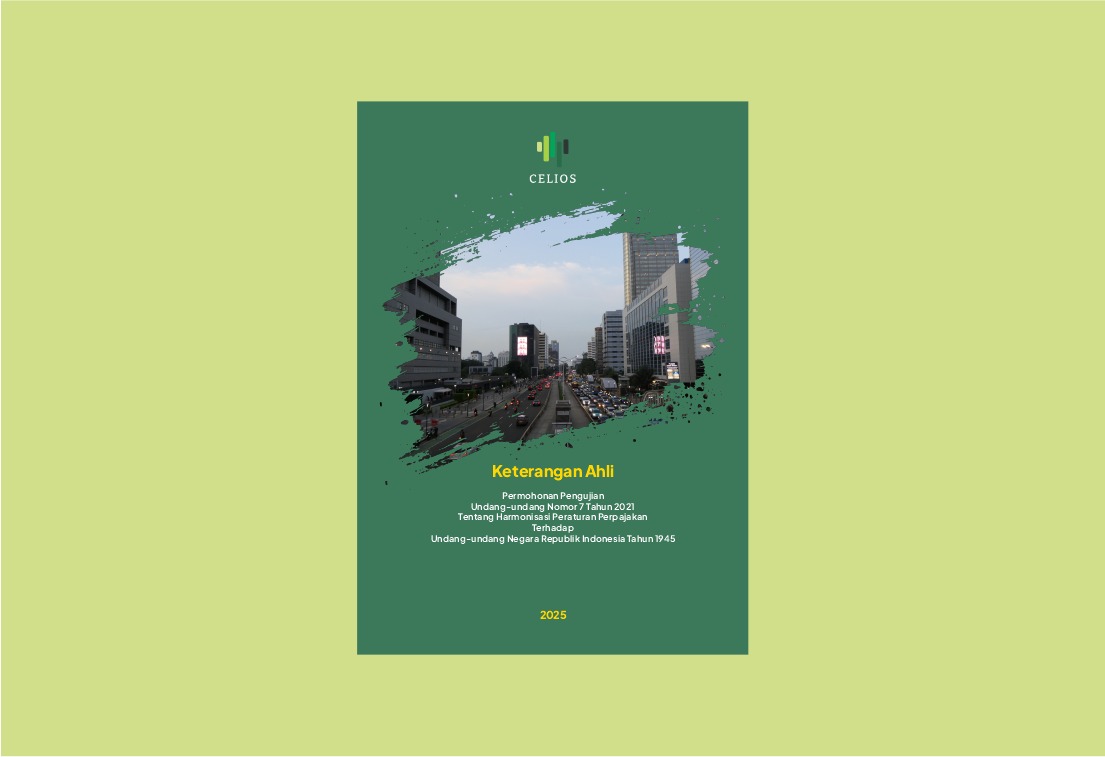
Jakarta, 9 Juli 2025—Center of Economic and Law Studies (CELIOS) secara resmi diundang untuk memberikan keterangan ahli dalam sidang uji materi Undang-Undang Nomor 7 Tahun 2021 tentang Pajak Pertambahan Nilai (PPN) di Mahkamah Konstitusi. CELIOS diwakili oleh Bhima Yudhistira Adhinegara, Ekonom sekaligus Direktur Eksekutif, serta Media Wahyudi Askar, Direktur Kebijakan Publik. Sidang ini menyoroti implikasi Pasal 4 dan 7 UU Harmonisasi Peraturan Perpajakan (UU HPP), khususnya terkait kebijakan kenaikan PPN menjadi 12%.
Bhima Yudhistira menilai kebijakan tersebut berisiko melemahkan daya beli, menciptakan ketidakpastian bagi pelaku usaha, serta menunjukkan lemahnya kesiapan regulasi. Hasil riset CELIOS memperkirakan PPN 12% dapat memangkas output nasional hingga Rp79,7 triliun, menurunkan pendapatan rumah tangga sebesar Rp64,8 triliun, dan menghilangkan lebih dari 550 ribu lapangan kerja hanya dalam setahun. Bhima juga menyoroti kerugian konsumen akibat kelebihan pembayaran PPN 1% tanpa mekanisme pengembalian, ditambah fakta bahwa sebagian ritel sudah lebih dulu menaikkan harga sebelum tarif resmi berlaku.
Media Wahyudi menekankan dampak regresif kenaikan PPN, di mana rumah tangga berpendapatan rendah hingga menengah menanggung beban paling berat karena hingga 90% penghasilan mereka habis untuk konsumsi. Kenaikan biaya energi dan transportasi juga ikut mendorong harga kebutuhan pokok, sehingga semakin menekan kelompok rentan. Ia turut mengkritisi struktur regulasi yang memungkinkan kenaikan PPN melalui Peraturan Pemerintah tanpa pembahasan legislatif, yang pada akhirnya mengurangi partisipasi publik dan melemahkan prinsip checks and balances dalam kebijakan fiskal.
CELIOS was formally invited to present expert testimony in the Constitutional Court’s judicial review of Law No. 7 of 2021 on Value-Added Tax (VAT). Representing CELIOS were Bhima Yudhistira Adhinegara, Economist and Executive Director, and Media Wahyudi Askar, Tax Policy Director. The session focused on the implications of Articles 4 and 7 of the Law on the Harmonization of Tax Regulations (UU HPP), particularly the policy to raise VAT to 12%.
Bhima Yudhistira argued that the policy risks weakening purchasing power, creating uncertainty for businesses, and reflecting poor policy preparedness. CELIOS research projects that a 12% VAT could cut national output by IDR 79.7 trillion, reduce household income by IDR 64.8 trillion, and cost over 550,000 jobs within a year. Bhima also highlighted consumer losses due to excess VAT payments without a refund mechanism, while noting that even before the rate officially applied, retailers had begun passing on higher costs.
Media Wahyudi emphasized the regressive impact, with lower- and middle-income households bearing the heaviest burden as up to 90% of their income goes to consumption. Rising energy and transport costs further drive up food prices, disproportionately affecting the poor. He also raised concerns over the regulatory structure that enables VAT hikes via Government Regulations without legislative oversight, undermining checks and balances in fiscal policymaking.