

Study Launch
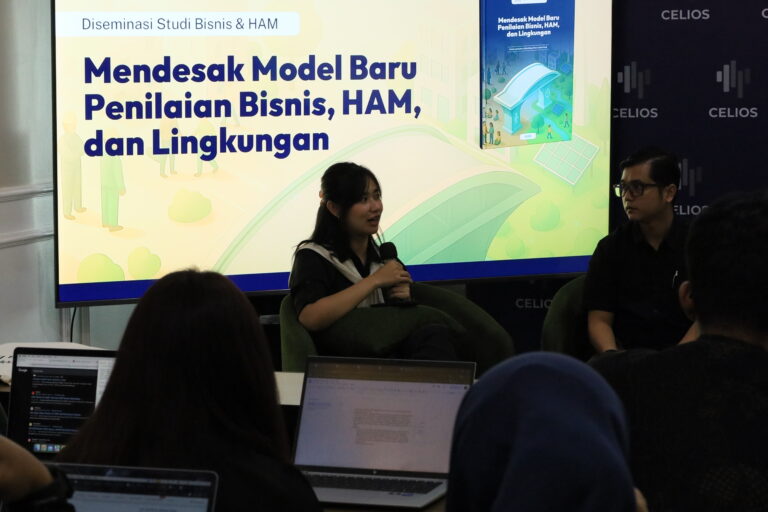
Reforming Business, Human Rights, and Environmental Assessment in Indonesia
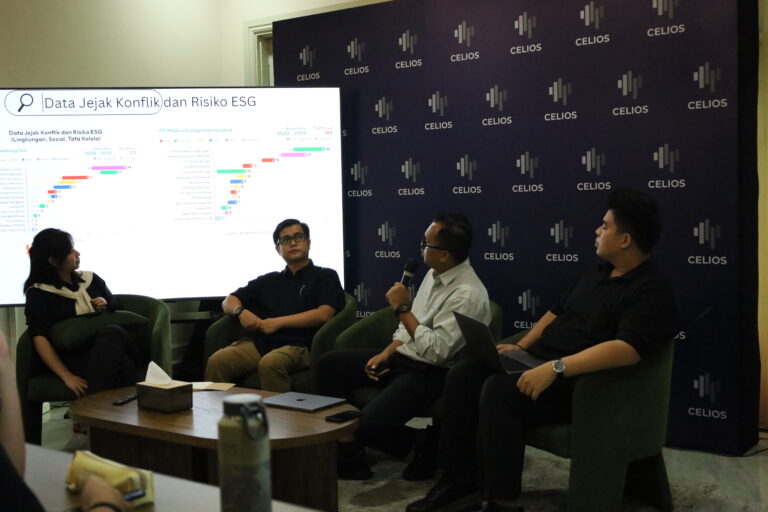
CELIOS and PUSHAM UII present a new study examining fundamental weaknesses in Indonesia’s corporate sustainability assessment frameworks—ranging from their voluntary nature and lack of field verification to limited public disclosure.
Focusing on 15 energy companies listed in the LQ45 index, the study finds that the majority of companies with active ESG reporting still receive Poor ratings across key dimensions, including environmental performance, human rights and supply chain risks, and labor practices. These findings highlight the persistence of partial compliance that fails to protect affected communities and ecosystems.
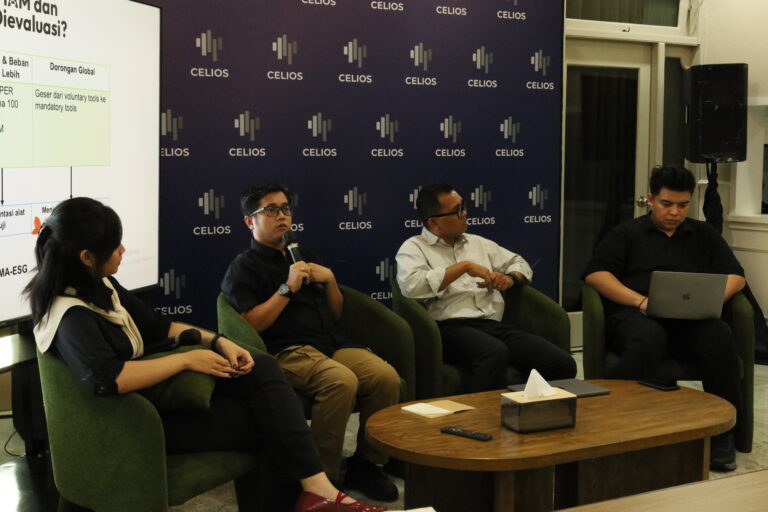
In response, CELIOS and PUSHAM UII introduce PRISMA-ESG, a new evaluation model integrating five core sustainability dimensions into 50 measurable indicators, offering a comprehensive, transparent, and risk-based approach to corporate accountability.
The study calls on the government to undertake comprehensive reform of business and human rights policies, adopt mandatory human rights and environmental due diligence, and link human rights and environmental compliance to licensing, financing, and corporate sanctions.