Key Points of the Constitutional Challenge to the Governance of the Free Nutritious Meal Program in the State Budget
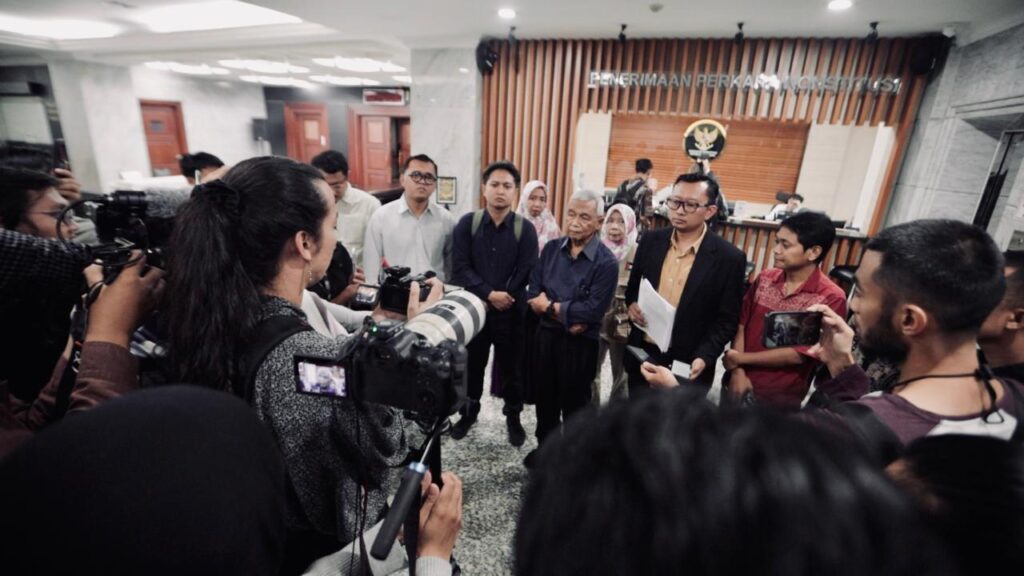
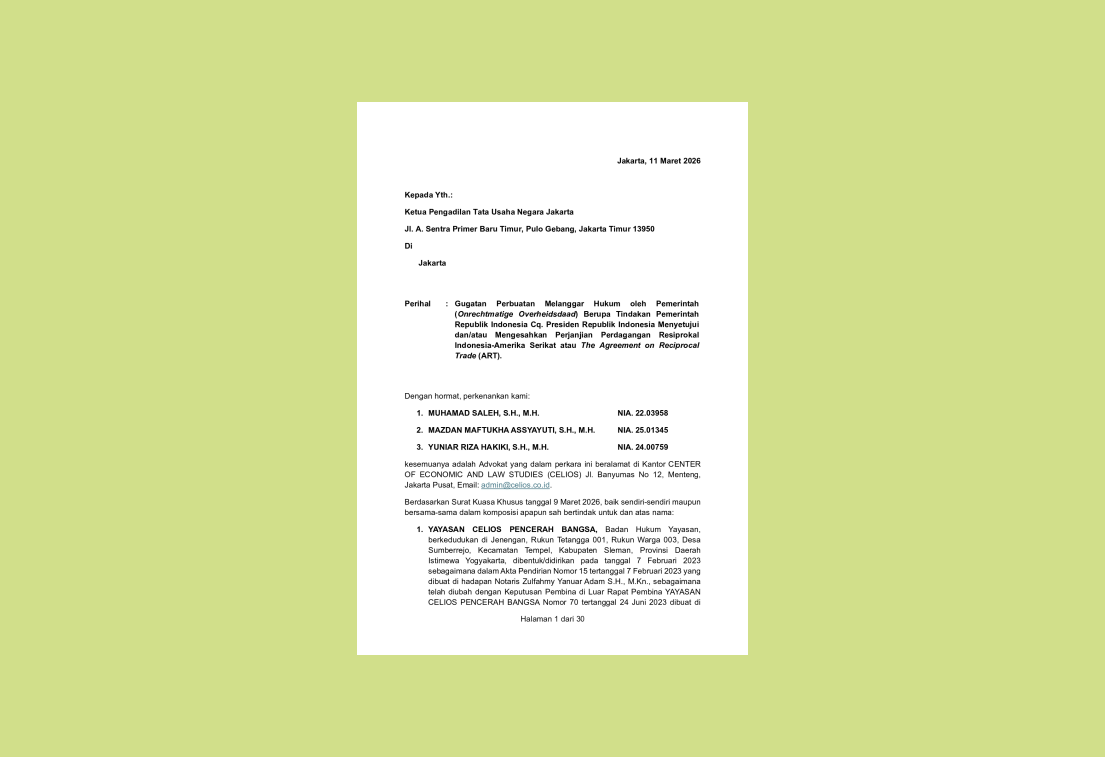
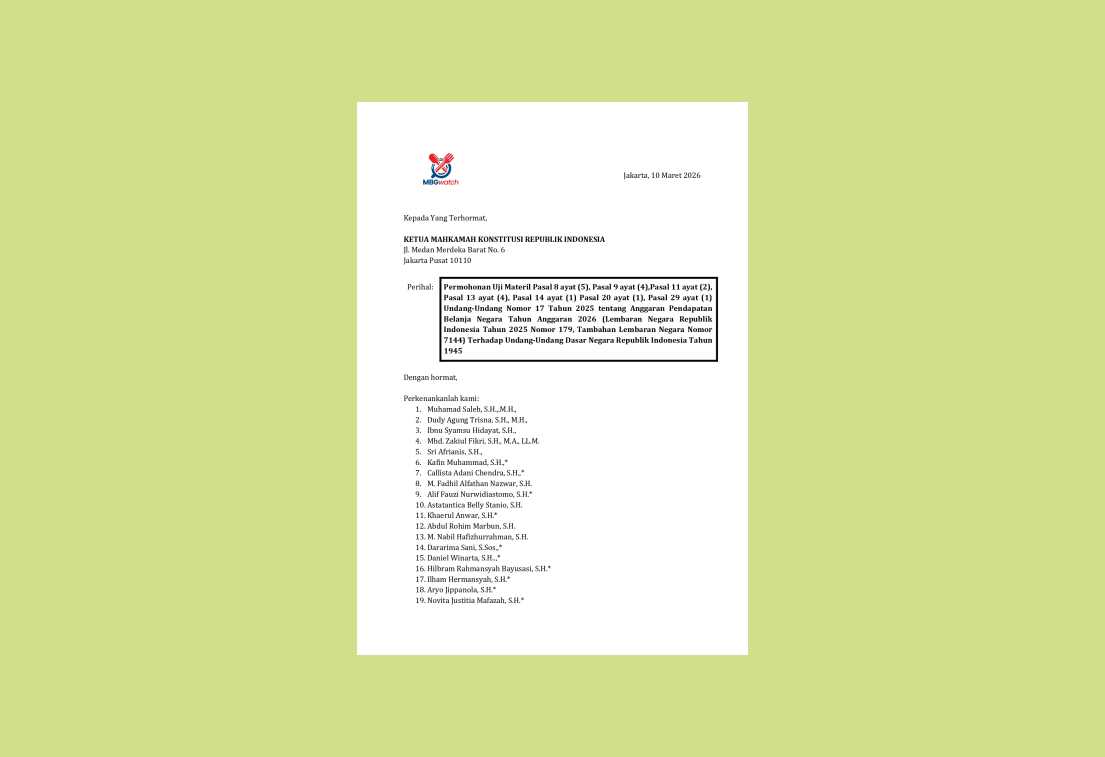
We have submitted a Judicial Review of the State Budget Law (APBN Law) to examine the governance of the Free Nutritious Meal Program (MBG), which raises several serious concerns regarding the management of public finances.
The main objections raised in this petition include the following:
- Abuse of authority in the management of public funds, as the MBG program was established without transparent and accountable fiscal planning.
- Potential misallocation of state spending, resulting from the shifting of budget priorities away from strategic sectors that had previously been planned within the State Budget.
- The impact of budget reallocation on key development sectors, including education, healthcare, social protection, and other development programs that risk experiencing reductions in budgetary support.
- Potential fiscal centralization that erodes regional financial capacity, thereby limiting the fiscal space of local governments to determine and manage their own development priorities.
- Violations of fiscal administrative discipline, including unclear categorization of state expenditures, budgeting under regulatory uncertainty, inconsistencies with government procurement mechanisms, and the potential for monopolistic practices in program implementation.
- The involvement of defense and security institutions in the economic activities of the MBG program, which risks undermining the principle of institutional professionalism and sound economic governance.
- Risks to national fiscal resilience, including the potential disruption of the national budget structure and a reduced fiscal capacity to respond to disasters and future crises.
This petition is submitted to ensure that the management of the State Budget remains in line with constitutional principles, transparency, accountability, and fiscal discipline.