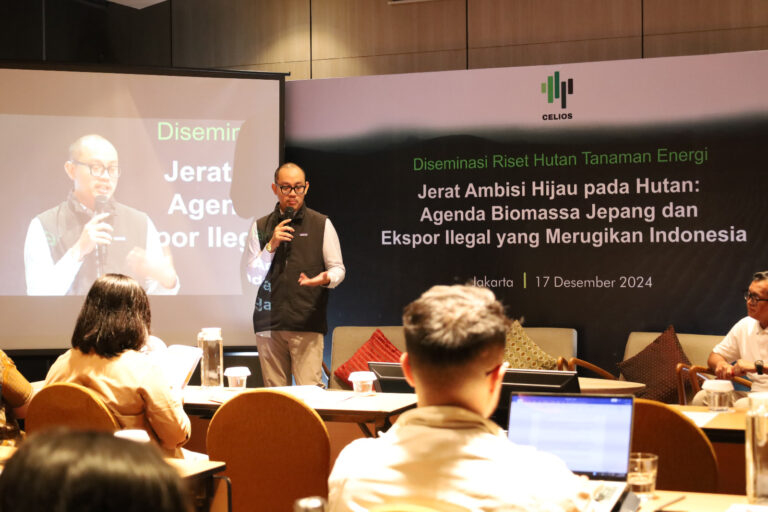
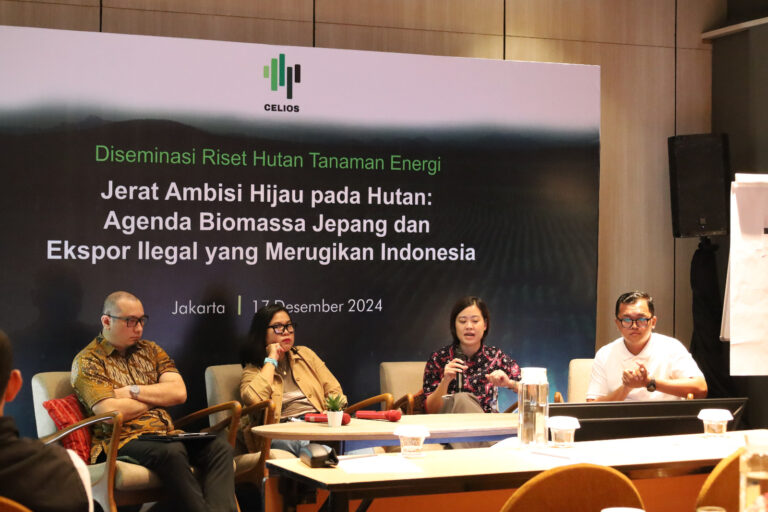
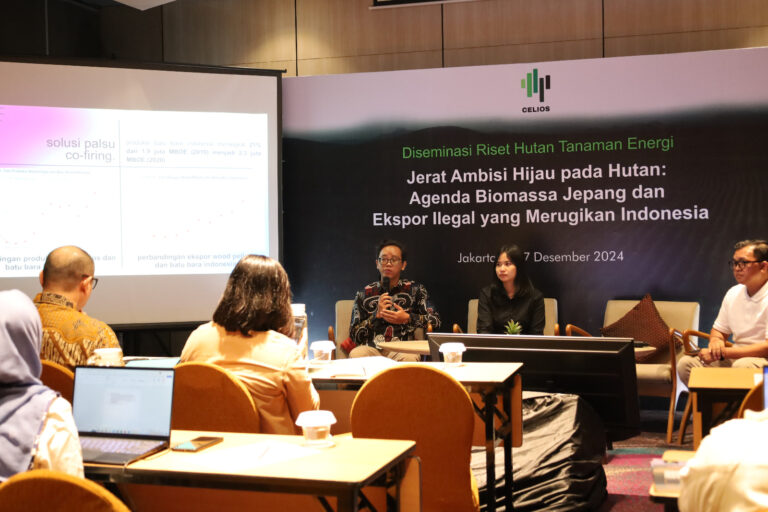
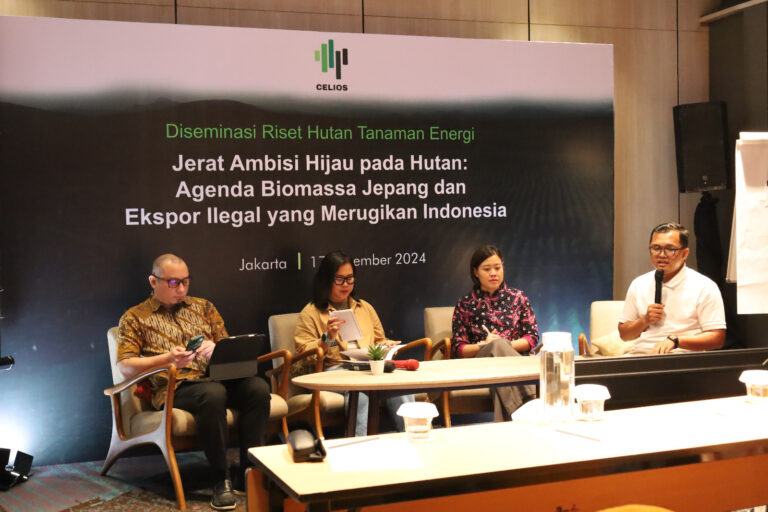
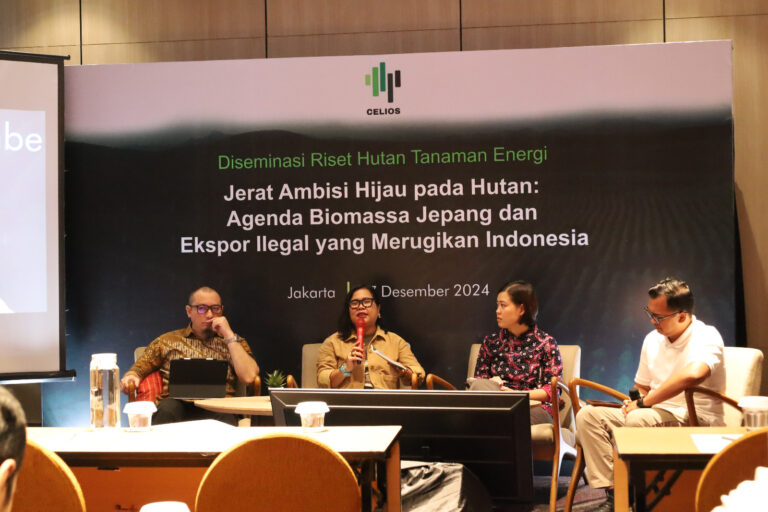
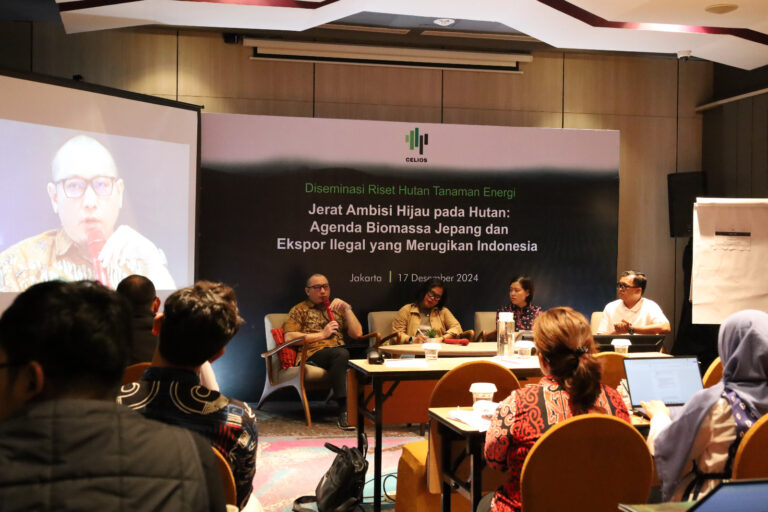
Jakarta, December 17, 2024 – The Socio-Bioeconomy desk has launched a study tracing the global supply chain of biomass at the expense of Borneo forests. Responding to international commitments to the climate crisis and global consumption trends, Indonesia is embarking on a plan to explore diverse energy beyond the fossil base. One that is being actively explored and highlighted is the co-firing of woody biomass in coal-fired power plants. Wood biomass in the form of wood pellets and wood chips will be mixed with coal for power generation needs (co-firing) and is predicted to be a solution to reduce dependence on fossil energy. This wood biomass is mass-produced (monoculture) from energy plantations (Hutan Tanaman Energi/HTE) .
The CELIOS research team found that the supply chain is detrimental to Indonesia. The study took the case of Indonesia’s largest HTE development concession. It considers that with a concession area of 94,378 hectares, its wood chips and wood pellets production is 100% exported to fulfill Japan’s biomass supply. The CELIOS Research Team, through this study, highlights Japan’s interest in not only importing woody biomass but investing massively in biomass projects in Indonesia.
Japan’s biomass ambitions are based on its GX (Green Transformation) strategy, which is triggered not only by climate commitments but also by replacing the role of nuclear plants after the Fukushima incident. In addition to Japan’s energy transition needs, the implementation of the Feed-In Tariff regulation in Japan triggered a massive surge in wood biomass exports from Indonesia. From 2012 to 2023, exports of wood chips surged 4,377.5%. Meanwhile, exports of wood pellets skyrocketed by 254,275% or more than 2,500 times.