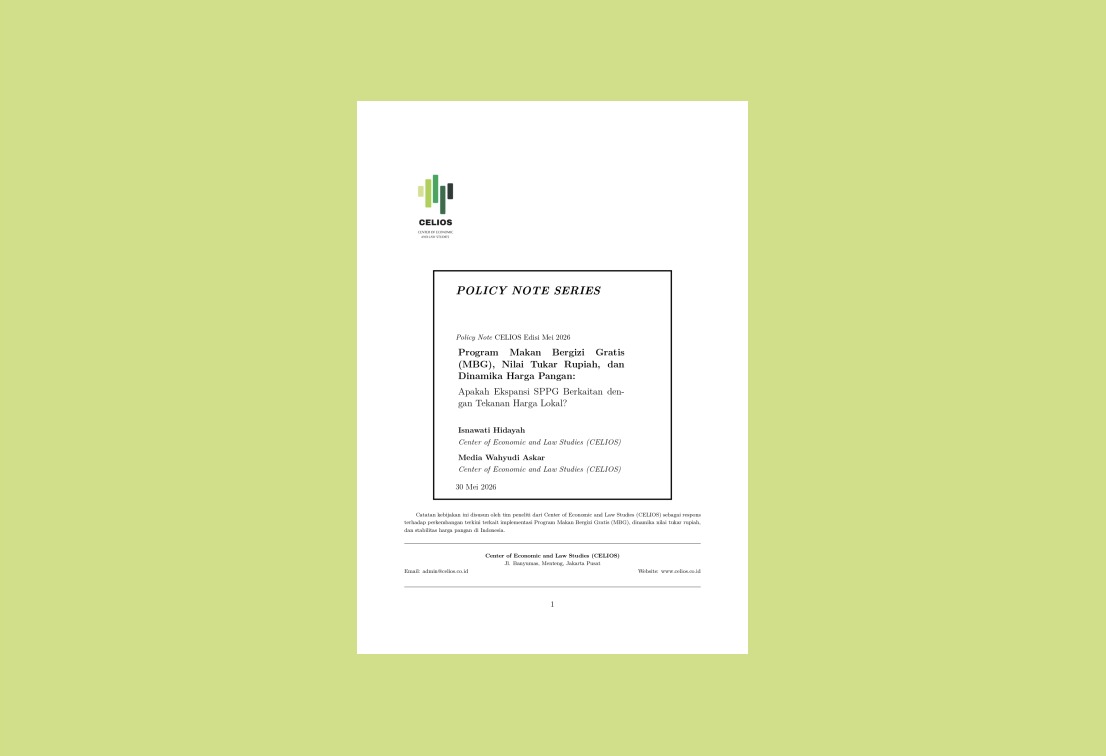
A recent study by the Center of Economic and Law Studies (CELIOS) examines the relationship between the expansion of Nutrition Fulfillment Service Units (SPPG), fluctuations in the rupiah exchange rate, and food price dynamics across Indonesian districts and municipalities.
Key findings include:
Every additional 10 SPPG units is associated with an average increase of approximately 0.08% in overall food prices at the district/city level.
Every additional 10 SPPG units is associated with a 0.12–0.13% increase in the prices of commodities commonly used in the Free Nutritious Meals (MBG) program, particularly rice, eggs, chicken, fish, cooking oil, sugar, onions, and chili peppers.
A depreciation of the Indonesian rupiah tends to be associated with higher aggregate food prices. However, this relationship becomes less pronounced after controlling for harvest seasons, inflation, food distribution patterns, and broader national market conditions through time fixed-effect analysis.
These findings suggest that the rapid expansion of food procurement under the MBG program may contribute to localized demand pressures, highlighting the importance of strengthening food supply chains and market stabilization measures as the program scales up nationwide.