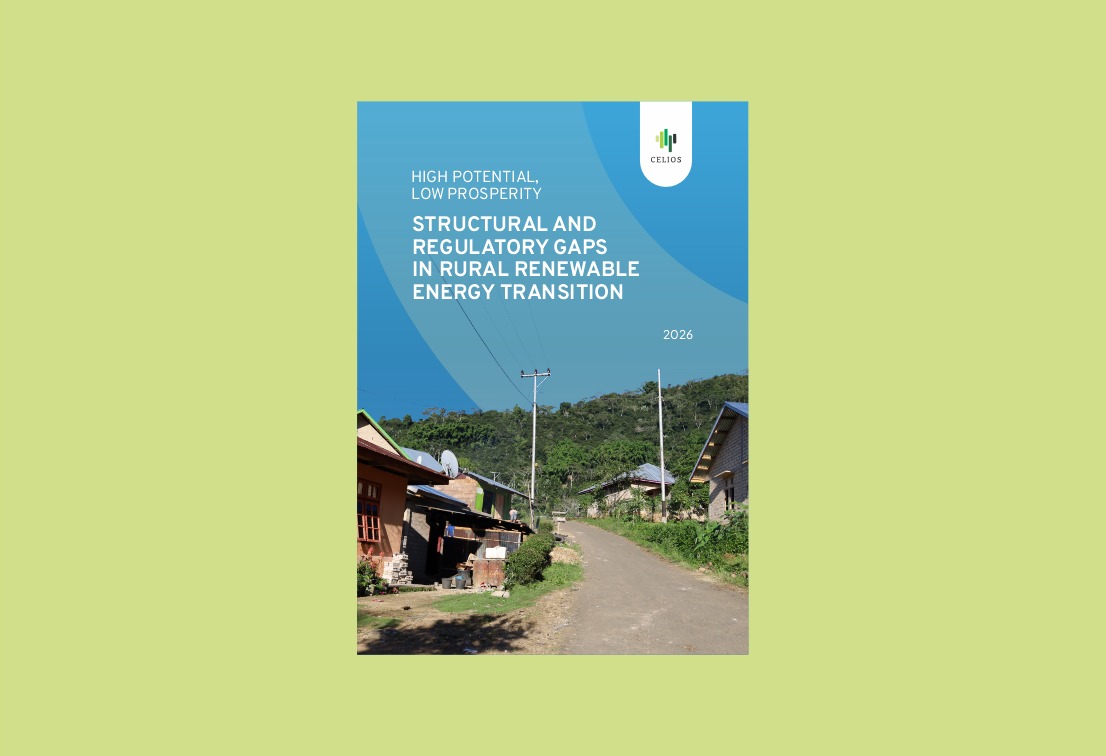
Indonesia’s renewable energy transition is leaving rural communities behind. A new study by CELIOS finds that despite Indonesia’s enormous renewable energy potential, structural inequality, weak regulation, and extractive economic dependence continue to hinder equitable energy access in villages. The report documents several alarming trends between 2021–2024. Household solar adoption declined by 26.3%, biogas utilization dropped by 19.8%, and community-scale micro-hydro development fell by 10.1%, indicating that rural renewable energy infrastructure is not expanding sustainably.
Meanwhile, more than 658,000 families still live without electricity access, with the highest concentration in Eastern Indonesia, especially Papua and Maluku regions. The study also highlights a severe mismatch between potential and realization. Out of more than 120,000 villages with water resource potential for hydro-based electricity, only around 1,000 villages have utilized it for power generation — meaning over 99% of village-scale hydro potential remains untapped. At the same time, environmental pressures in rural areas continue to intensify. Water pollution cases increased to more than 11,000 villages, while over 15,000 villages remain tied to extractive mining activities that correlate with slower renewable energy adoption and worsening ecological vulnerability. To measure these inequalities, the report introduces the Energy Vulnerability Index (IKE), which maps multidimensional energy risks across all 38 provinces in Indonesia.
The findings show that energy vulnerability is disproportionately concentrated in Eastern Indonesia, with Central Papua identified as the most vulnerable province, while Jakarta records the lowest vulnerability score. Beyond infrastructure and statistics, the study argues that energy transition must be understood as a question of justice and shared prosperity. Renewable energy development should not merely replace fossil fuels, but also transform ownership, participation, and benefit-sharing structures for local and Indigenous communities. Without structural reforms, Indonesia risks reproducing old extractive inequalities under the banner of green transition.