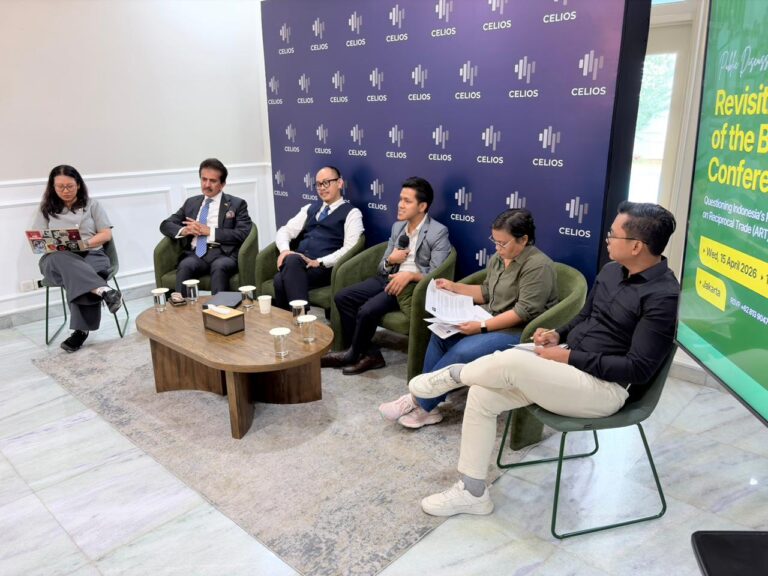
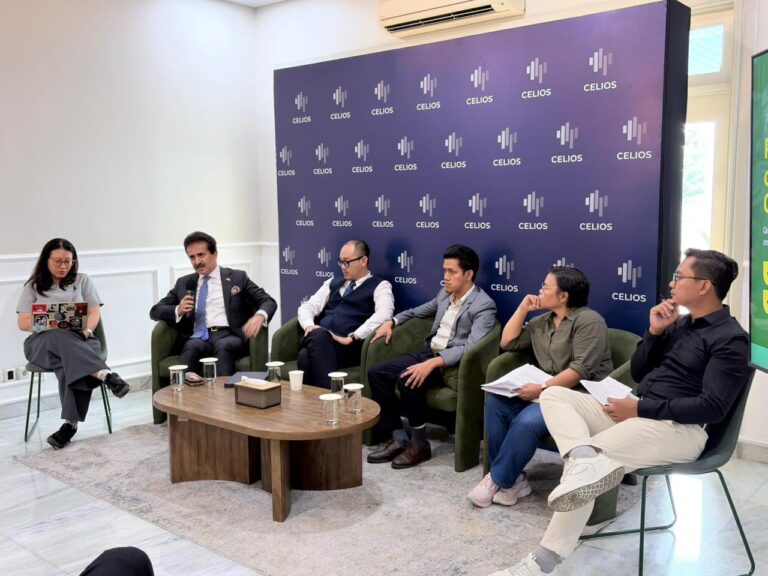
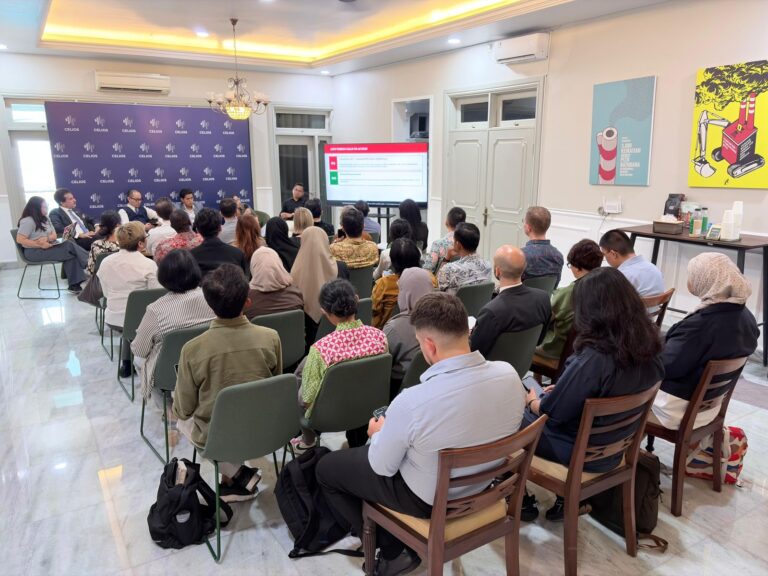
CELIOS, in collaboration with WALHI, Trend Asia, the Indonesia for Global Justice (IGJ), the Alliance of Independent Journalists (AJI), and Solidaritas Perempuan, convened a public discussion to reflect on Indonesia’s position within the Agreements on Reciprocal Trade (ART) and the Board of Peace (BOP), in light of the enduring legacy of the Bandung Conference. The forum underscored how the principles of sovereignty, solidarity, and equitable cooperation remain highly relevant as Indonesia navigates an increasingly complex global landscape shaped by shifting power dynamics and emerging governance frameworks.
The discussion also highlighted the evolving challenges in Indonesia’s foreign policy landscape, where strong coordination across institutions remains essential to ensure coherence between diplomatic priorities and broader national interests. Participants observed that recent approaches appear increasingly centralized, raising questions about alignment and communication among key stakeholders. In this context, concerns were expressed regarding the ART framework, particularly its limited tangible benefits for Indonesia and its potential implications for economic sovereignty. Similarly, Indonesia’s decision to engage with the Board of Peace (BOP) was also discussed, with participants noting the need for greater clarity on its strategic value, transparency in the decision-making process, and its alignment with Indonesia’s long-standing foreign policy principles. Overall, the forum emphasized the importance of strengthening coordination, transparency, and inclusive dialogue to ensure that Indonesia’s international engagements remain balanced, accountable, and aligned with long-term national priorities.