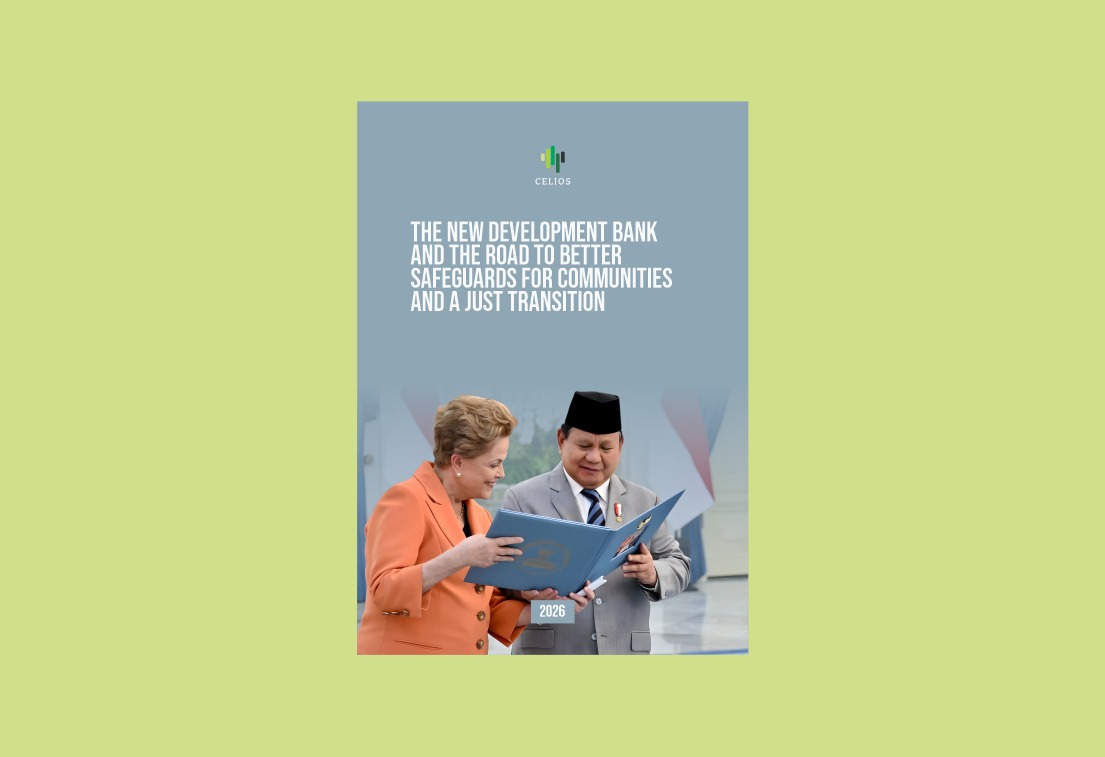
The New Development Bank (NDB) plays an increasingly strategic role in financing infrastructure and climate-related projects across developing countries, positioning itself as a key actor in advancing sustainable development and a just energy transition. As NDB’s portfolio expands, this report underscores the growing importance of strong social and environmental safeguard frameworks to protect affected communities and ecosystems. Drawing on comparative policy analysis and institutional assessment, the study finds that while NDB has established baseline safeguards, its current framework remains largely principle-based and highly reliant on national systems, creating risks of inconsistent application—particularly in high-impact projects involving Indigenous Peoples, resettlement, and livelihood restoration. The report situates NDB within broader debates on Just Transition, highlighting gaps in stakeholder engagement, the absence of clear operational guidance on Free, Prior, and Informed Consent (FPIC), and the need for more accessible and effective accountability mechanisms. Overall, the study argues that strengthening safeguards, institutional accountability, and community participation is essential for ensuring that NDB’s climate and infrastructure financing supports inclusive, equitable, and sustainable development without exacerbating social inequalities or environmental harm.